在民国货币的浩瀚星河中,湖南省造双旗币当制钱二十文以其独特的湖湘文化印记、精湛的铸造工艺与深厚的历史底蕴,成为收藏界备受瞩目的“民国地方货币瑰宝”。这枚诞生于辛亥革命后的铜币,不仅是湖南从帝制货币向共和货币转型的历史见证,更承载着湖湘大地对共和理想的坚守与对民生富足的祈愿。它跨越百年时光,带着岁月的痕迹与历史的温度,静静诉说着那个风云变幻的时代里湖南的故事。
一、历史渊源:共和初创的货币注脚
(一)时代背景:辛亥革命后的湖南变革
1911 年,辛亥革命的枪声划破夜空,武昌起义的胜利如星星之火,迅速点燃了全国的革命热情。湖南作为最早响应起义的省份之一,在革命浪潮的推动下,于 1912 年正式迈入民国时代。这一时期,湖南的政治、经济、社会都发生了翻天覆地的变化。旧的封建帝制被推翻,新的共和政权亟待建立,而货币作为经济交易的重要媒介,也面临着从帝制货币向共和货币转型的迫切需求。湖南省造双旗币当制钱二十文便是在这样的历史背景下应运而生,它承载着湖南人民对新生共和政权的期待与支持,是湖南货币史上的重要里程碑。
(二)币面符号:共和理念的具象表达
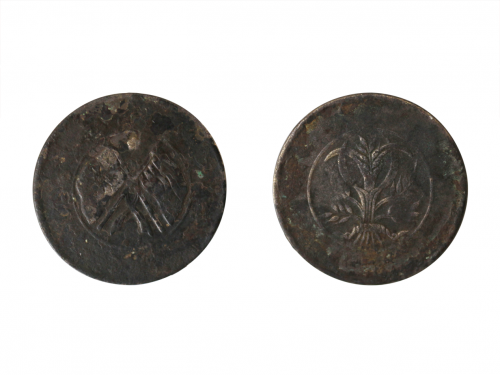
这枚铜币的正面,交叉的铁血十八星旗与五色旗格外醒目。铁血十八星旗是武昌起义的象征,十八颗星代表当时参与起义的十八个行省,寓意着全国各省的团结与联合。五色旗则是民国初年的国旗,由红、黄、蓝、白、黑五种颜色组成,分别代表汉、满、蒙、回、藏五族,体现了“五族共和”的理念。这两种旗帜的组合,不仅是民国“五族共和”理念的具象化表达,更暗含了湖南对新生共和政权的认同与拥护。在那个动荡不安的年代,这面旗帜如同一种精神象征,激励着湖南人民为建设共和新国家而努力奋斗。
(三)背面寓意:农业大省的民生祈愿
铜币的背面,饱满的稻穗与舒展的枝叶构成了嘉禾纹饰。湖南自古以来就是农业大省,素有“鱼米之乡”的美誉。嘉禾纹饰既延续了民国货币“五谷丰登”的吉祥寓意,又暗合了湖南作为农业大省对丰收富足的殷切期盼。在那个战乱频繁、民生凋敝的时代,农业的稳定与发展对于保障人民的基本生活至关重要。这枚铜币上的嘉禾纹饰,反映了湖南人民对和平、安定生活的向往,以及对农业丰收、经济繁荣的美好憧憬。
(四)转型意义:地方货币体系的革新
湖南省造双旗币当制钱二十文的诞生,标志着湖南从封建帝制货币体系向共和货币体系的转型。在封建帝制时期,货币的铸造权往往集中在中央政府手中,货币的形制、材质、币值等都由中央统一规定。而民国初年,随着地方政权的崛起,各地纷纷开始铸造具有地方特色的货币。湖南省造双旗币的发行,是湖南地方政府根据本地经济实际情况,对货币体系进行的一次重要革新。其币面设计、材质选择与币值设定,均体现了民国初年地方政权对中央理念的践行与地方经济文化的主动彰显,为湖南的经济发展和社会稳定提供了有力的支持。
二、工艺典范:湖湘铸币技术的巅峰之作
(一)币面设计:多元元素的和谐统一
• 正面设计:双旗图案位于铜币正面的中心位置,细节刻画入微。旗帜的褶皱、星芒的纹路都清晰可辨,仿佛能让人感受到旗帜在风中飘扬的动态。环绕双旗的“湖南省造”四字,字体古朴大气,笔画刚劲有力,彰显出湖南地方政权的威严与庄重。下方的“当制钱二十文”直指币值,字体简洁明了,满足了地方经济交易的需求。整个正面设计布局合理,元素之间相互呼应,形成了一种和谐统一的美感。 • 背面设计:嘉禾纹饰以稻穗为主体,颗粒饱满、枝叶自然,仿佛能让人闻到稻谷的清香。稻穗的排列错落有致,既体现了农业生产的丰收景象,又给人一种生机勃勃的感觉。环绕嘉禾纹饰的英文“REPUBLIC OF CHINA”,体现了民国初年“接轨国际”的时代思潮,赋予了铜币流通的通用性。这种将中国传统吉祥纹饰与西方文字相结合的设计,不仅展现了湖南铸币工匠的创新精神,也反映了当时中国社会在文化交流与融合方面的趋势。
(二)材质选择:黄铜质地温润如玉
这枚铜币以黄铜为主材,红铜具有良好的延展性,质地温润,色泽柔和。在铸造过程中,黄铜能够更好地填充模具,使币面的纹饰更加清晰、细腻。经过百年的氧化,铜币表面形成了一层自然的包浆,色泽更加深沉、古朴,分布均匀,既保护了币面免受腐蚀,又增添了铜币的历史感和艺术价值。这种包浆是岁月留下的痕迹,也是铜币历经沧桑的见证,每一道纹理都蕴含着丰富的历史信息。
(三)铸造工艺:精益求精的匠心之作
湖南省造双旗币的铸造工艺十分精湛,体现了当时湖南铸币工业的高超水平。在铸造过程中,工匠们采用了先进的模具制作技术和冲压工艺,确保了铜币的尺寸精度和纹饰清晰度。模具的制作需要经过多道工序,从设计图纸到雕刻模型,再到制作模具,每一个环节都需要工匠们精心打磨,力求做到尽善尽美。冲压工艺则要求压力均匀、温度适宜,以保证铜币的厚度均匀、表面光滑。经过严格的铸造工艺,这枚铜币的每一个细节都处理得非常到位,无论是双旗的褶皱、嘉禾的颗粒,还是文字的笔画,都清晰可辨,展现了工匠们精益求精的匠心精神。
三、文化价值:湖湘精神的物质载体
(一)历史价值:地方货币史的关键实物
这枚湖南省造双旗币当制钱二十文作为湖南民国货币史的关键实物遗存,具有极高的历史价值。它记录了民国初年湖南的政治治理、经济发展与社会期待。从双旗与湖南省造的组合中,我们可以窥见地方政权对中央理念的践行,湖南地方政府在发行货币时,既遵循了民国中央政府关于货币改革的大方向,又结合了本地的实际情况,体现了地方政权的自主性和灵活性。从嘉禾纹饰中,我们能分析农业大省对民生丰饶的祈愿,反映了当时湖南经济以农业为主的特点,以及人民对美好生活的向往。从币值设定中,可反推地方经济的交易规模与货币需求,为我们研究民国初年湖南的经济发展状况提供了重要的实物资料。
(二)艺术价值:多元融合的视觉盛宴
这枚铜币的币面布局对称和谐,双旗的庄重、嘉禾的柔美与地域标识形成多元视觉层次,给人一种美的享受。纹饰刻画细腻,旗帜褶皱、稻穗颗粒、文字笔画清晰可辨,体现了铸币工匠对细节的极致追求。每一个线条、每一个图案都经过精心设计,展现了高超的艺术水准。同时,铜币上中西元素(中文与英文)、中央与地方符号(双旗与湖南省造)的融合,反映了民国初年湖南“传统与现代”“中央与地方”的文化与政治碰撞。这种融合不仅体现了当时中国社会在文化交流与融合方面的趋势,也为铜币增添了独特的艺术魅力。
(三)文化传承价值:湖湘货币文化的典型代表
湖南省造双旗币当制钱二十文串联起了湖南民国肇始的货币革新与地域变迁,是湖湘货币文化的典型代表。它承载着湖湘人民的历史记忆和文化情感,是湖湘文化的重要组成部分。对于收藏者而言,它不仅是藏品库中的“湖湘民国史货币叙事”,更是文化传承的载体。通过收藏和研究这枚铜币,我们可以深入了解湖南民国时期的历史文化、经济发展和社会变迁,将民国初年湖南的货币传奇、工艺巅峰与地域精神传递给一代又一代的收藏爱好者,让湖湘文化在历史的长河中不断传承和发扬。
四、收藏推荐:不可多得的典藏珍品
(一)资深藏家:丰富收藏体系的点睛之笔
对于资深藏家来说,湖南省造双旗币当制钱二十文是丰富“民国地方货币收藏体系”的点睛之笔。在民国地方货币收藏中,湖南地区的货币具有独特的地位和价值。这枚铜币以其鲜明的历史印记、精湛的工艺与深厚的文化底蕴,为收藏序列增添了浓厚的湖湘货币文化色彩。它不仅可以与其他地区的民国货币相互映衬,展示民国时期不同地区的货币特色和发展历程,还可以作为研究民国地方货币的重要实物资料,为藏家的研究工作提供有力的支持。拥有一枚这样的铜币,无疑是对资深藏家收藏实力和文化素养的一种彰显。
(二)新晋藏家:入门民国地方钱币的优质选择
对于新晋藏家来说,湖南省造双旗币当制钱二十文是入门民国地方钱币收藏的优质选择。这枚铜币的题材结合了中央与地方特色,历史背景清晰,工艺特征鲜明,容易让新晋藏家理解和接受。通过收藏这枚铜币,新晋藏家可以快速建立对民国地方铜元的认知与喜爱,了解民国时期货币的铸造工艺、设计风格和文化内涵。同时,这枚铜币在市场上的流通性较好,具有一定的保值和增值潜力,对于新晋藏家来说是一种相对安全可靠的投资选择。它就像一把钥匙,为新晋藏家打开了民国地方钱币收藏的大门,引领他们走进一个充满历史魅力和文化价值的收藏世界。
当您将这枚湖南省造双旗币当制钱二十文纳入典藏,便是将一段波澜壮阔的湖南民国开篇历史凝结于掌心。它带着岁月的痕迹和历史的温度,在您的收藏世界中继续讲述那个时代的货币传奇与地域变迁。无论是作为投资收藏,还是作为文化传承的载体,这枚铜币都具有不可估量的价值。让我们一同珍视这份历史遗产,让它在时光的长河中继续闪耀着独特的光芒。
Boutique Recommendation: Hunan Province-made Double Banner Coin, Equivalent to Twenty Copper Coins – A Brilliant Crystallization of Hunan Monetary Culture. In the vast galaxy of Republic of China currency, the Hunan Province-made Double Banner Coin, Equivalent to Twenty Copper Coins, stands out as a "gem of local currency in the Republic of China" in the collection world due to its unique imprint of Hunan culture, exquisite casting craftsmanship, and profound historical heritage. This copper coin, born after the Xinhai Revolution, not only serves as a historical witness to Hunan's transition from imperial currency to republican currency, but also carries the Hunan region's adherence to the ideal of republicanism and its aspiration for prosperity and well-being. Spanning a century, it bears the traces of time and the warmth of history, quietly telling the story of Hunan in that era of rapid change.
I. Historical Origin: Footnotes on the Currency of the Early Republic (I) Historical Background: Transformations in Hunan after the Xinhai Revolution In 1911, the gunshots of the Xinhai Revolution pierced the night sky, and the victory of the Wuchang Uprising, like a spark, quickly ignited revolutionary enthusiasm across the country. As one of the earliest provinces to respond to the uprising, Hunan officially entered the Republic of China era in 1912, driven by the revolutionary tide. During this period, Hunan underwent earth-shaking changes in politics, economy, and society. The old feudal monarchy was overthrown, and a new republican regime urgently needed to be established. As an important medium of economic transactions, currency also faced an urgent need to transition from imperial currency to republican currency. The Hunan Provincial Double-Flag Coin, minted in twenty-wen denomination, emerged against this historical backdrop. It carries the expectations and support of the Hunan people for the newly established republican regime and is an important milestone in the history of Hunan currency.
(II) Currency Symbol: A Concrete Expression of the Republican Idea On the obverse of this copper coin, the crossed Iron and Blood Flag with 18 Stars and the Five-Color Flag are particularly eye-catching. The Iron and Blood Flag with 18 Stars is a symbol of the Wuchang Uprising, with the 18 stars representing the 18 provinces that participated in the uprising at that time, symbolizing the unity and solidarity of all provinces in the country. The Five-Color Flag was the national flag of the early Republic of China, consisting of five colors: red, yellow, blue, white, and black, representing the five ethnic groups of Han, Manchu, Mongolian, Hui, and Tibetan, embodying the concept of "Five-Ethnic Republic". The combination of these two flags is not only a concrete expression of the "Five-Ethnic Republic" concept of the Republic of China, but also implies Hunan's recognition and support for the newly established republican regime. In that turbulent era, this flag served as a spiritual symbol, inspiring the people of Hunan to strive for the construction of a new republican country.
(III) Implicit Meaning on the Back: On the back of the copper coin with the people's livelihood aspirations of an agricultural province, the full-bodied rice ears and spreading branches and leaves constitute the Jiahe pattern. Hunan has been an agricultural powerhouse since ancient times, renowned as the "land of fish and rice". The Jiahe pattern not only continues the auspicious meaning of "plenty of grain" from the Republic of China currency, but also subtly reflects Hunan's ardent aspirations for a bountiful harvest and prosperity as an agricultural province. In that era of frequent wars and destitute living conditions, the stability and development of agriculture were crucial for ensuring the basic livelihood of the people. The Jiahe pattern on this copper coin reflects the Hunan people's yearning for peace and stability, as well as their beautiful aspirations for agricultural harvests and economic prosperity.
(IV) Transformational Significance: The Innovation of the Local Currency System The birth of the Hunan Provincial-made Double Banner Coin, which was equivalent to twenty copper coins, marked the transformation of Hunan from a feudal imperial currency system to a republican currency system. During the feudal imperial period, the right to mint currency was often concentrated in the hands of the central government, and the shape, material, and value of currency were all uniformly regulated by the central government. However, in the early years of the Republic of China, with the rise of local governments, various regions began to mint currency with local characteristics. The issuance of the Hunan Provincial-made Double Banner Coin was an important innovation in the currency system by the Hunan local government based on the actual economic situation of the region. Its coin design, material se lection, and value setting all reflected the local government's implementation of central concepts and active demonstration of local economic culture in the early years of the Republic of China, providing strong support for Hunan's economic development and social stability.
II. Technological Paragon: The Pinnacle of Hunan Coinage Technology (I) Coin Design: Harmony and Unity of Multiple Elements
Front Design: The double-flag pattern is located in the center of the copper coin's front, with exquisite details. The folds of the flags and the patterns of the star rays are clearly discernible, as if one can feel the dynamic motion of the flags fluttering in the wind. The four characters "Made in Hunan Province" surrounding the double flags have an ancient and elegant font, with vigorous and powerful strokes, highlighting the majesty and solemnity of the local government in Hunan. The words "worth twenty cash coins" below directly indicate the coin value, with a simple and clear font, meeting the needs of local economic transactions. The entire front design is reasonably arranged, with elements echoing each other, forming a harmonious and unified aesthetic.
Back design: The Jiahe pattern features rice ears as the main element, with plump grains and natural branches and leaves, as if one could smell the fragrance of rice. The arrangement of the rice ears is patchwork, which not only reflects the harvest scene of agricultural production but also gives a sense of vitality. The English phrase "REPUBLIC OF CHINA" surrounding the Jiahe pattern embodies the trend of "aligning with the international community" in the early years of the Republic of China, endowing the copper coins with currency universality. This design, combining traditional Chinese auspicious patterns with Western characters, not only demonstrates the innovative spirit of Hunan coinage craftsmen but also reflects the trend of cultural exchange and integration in Chinese society at that time.
(II) Material Se lection: Brass, with a texture as smooth as jade, is the main material used in this copper coin. Red copper possesses excellent ductility, a smooth texture, and a soft hue. During the casting process, brass can better fill the mold, resulting in clearer and more delicate patterns on the coin's surface. After a century of oxidation, a natural patina forms on the surface of the copper coin, giving it a deeper and more ancient luster, evenly distributed. This patina not only protects the coin's surface from corrosion but also enhances its historical significance and artistic value. This patina is a testament to the passage of time and the coin's journey through vicissitudes, with each texture containing rich historical information.
(III) Foundry Techniques: A Masterpiece of Craftsmanship The casting technique used for the Hunan Provincial Double Flag Coin is highly refined, reflecting the superb level of Hunan's coinage industry at that time. During the casting process, craftsmen employed advanced mold-making technology and stamping techniques to ensure the dimensional accuracy and clarity of the coin's patterns. The mold-making process involves multiple steps, from designing the drawings and sculpting the model to creating the mold itself, each step requiring meticulous craftsmanship to achieve perfection. The stamping technique demands uniform pressure and appropriate temperature to ensure the copper coin has uniform thickness and a smooth surface. Through rigorous foundry techniques, every detail of this copper coin is exquisitely crafted, from the folds of the double flag and the grains of the jiahe (a symbol of good harvest), to the strokes of the characters, all are clearly distinguishable, showcasing the craftsmen's spirit of excellence.
III. Cultural Value: Material Carrier of the Hu-Xiang Spirit (I) Historical Value: A Key Material Object in Local Currency History. This Hunan Provincial Double Flag Coin, minted as a twenty-wen coin during the Republic of China era, serves as a crucial material relic in the monetary history of Hunan. It holds immense historical value as it documents the political governance, economic development, and social aspirations of Hunan during the early years of the Republic. By examining the combination of the double flag and the Hunan Provincial inscription, we can glimpse the local government's implementation of central concepts. When issuing currency, the Hunan Provincial Government not only followed the general direction of monetary reform set by the central government of the Republic of China but also incorporated local practical situations, demonstrating the autonomy and flexibility of the local government. The grain pattern on the coin reflects the agricultural province's aspirations for abundant livelihood, highlighting the agricultural-dominated economy of Hunan at that time and the people's aspirations for a better life. The setting of the coin's value can be used to infer the transaction scale and currency demand of the local economy, providing important material evidence for our research on the economic development of Hunan during the early years of the Republic of China.
(II) Artistic Value: A Visual Feast of Diverse Fusion The layout of this copper coin is symmetrical and harmonious, with the solemnity of the double flags, the gracefulness of the grain ears, and the regional symbols forming a diverse visual hierarchy, providing a sense of aesthetic enjoyment. The ornamentation is exquisitely carved, with the folds of the flags, the grains of the rice ears, and the strokes of the characters clearly discernible, reflecting the minting craftsmen's extreme pursuit of detail. Every line and every pattern has been carefully designed, demonstrating superb artistic skill. At the same time, the fusion of Chinese and Western elements (Chinese and English), as well as central and local symbols (double flags and "Made in Hunan Province") on the copper coin reflects the cultural and political collisions between "tradition and modernity" and "central and local" in Hunan during the early years of the Republic of China. This fusion not only reflects the trend of cultural exchange and fusion in Chinese society at that time but also adds unique artistic charm to the copper coin.
(III) Cultural Heritage Value: The Hunan Provincial Double Flag Coin, a typical representative of Hunan's monetary culture, links the monetary innovation and regional changes at the beginning of the Republic of China in Hunan. It carries the historical memory and cultural sentiment of the Hunan people and is an important component of Hunan culture. For collectors, it is not only a "narrative of the history of the Republic of China in Hunan" in the collection, but also a carrier of cultural heritage. By collecting and studying this copper coin, we can gain a deep understanding of the historical culture, economic development, and social changes during the Republic of China period in Hunan. It passes on the monetary legends, craftsmanship peaks, and regional spirit of Hunan in the early years of the Republic to generation after generation of collectors, allowing Hunan culture to continue to be inherited and carried forward in the long river of history.
IV. Collection Recommendation: A Rare and Valuable Rarity (I) Seasoned Collectors: The Finishing Touch to a Rich Collection System For seasoned collectors, the Hunan Provincial Double Flag Coin, minted as a twenty-wen currency coin during the Republic of China period, serves as the finishing touch to their extensive "collection system of local currencies of the Republic of China". In the realm of collecting local currencies of the Republic of China, currencies from the Hunan region hold a unique status and value. This copper coin, with its distinct historical imprint, exquisite craftsmanship, and profound cultural heritage, adds a strong flavor of Hunan currency culture to the collection series. It can not only be paired with currencies from other regions of the Republic of China to showcase the unique characteristics and development paths of currencies in different areas during that period, but also serve as an important physical material for researching local currencies of the Republic of China, providing strong support for collectors' research work. Owning such a copper coin is undoubtedly a demonstration of the collecting strength and cultural literacy of seasoned collectors.
(II) New Collectors: A Quality Choice for Beginners in Collecting Local Currency of the Republic of China For new collectors, the Hunan Provincial Double Banner Coin, minted as a twenty-wen coin during the Republic of China period, serves as a quality choice for collecting local currency. The theme of this copper coin combines central and local characteristics, with a clear historical background and distinct craftsmanship features, making it easy for new collectors to understand and accept. By collecting this copper coin, new collectors can quickly establish their knowledge and appreciation for local copper coins of the Republic of China, understand the casting techniques, design styles, and cultural connotations of currency during the Republic of China period. At the same time, this copper coin has good circulation in the market, with certain potential for value preservation and appreciation, making it a relatively safe and reliable investment choice for new collectors. It is like a key that opens the door to collecting local currency of the Republic of China for new collectors, leading them into a world of collection full of historical charm and cultural value.
When you add this Hunan Province-made double-flag coin, minted as a twenty-wen currency, to your collection, you are holding in your palm a condensed chapter of the magnificent history of the early Republic of China in Hunan. With the imprint of time and the warmth of history, it continues to narrate the monetary legends and regional changes of that era in your world of collecting. Whether as an investment or a cultural heritage, this copper coin holds immeasurable value. Let us cherish this historical legacy together, allowing it to continue to shine with its unique brilliance through the long river of time.